
 1206
 Dec. 05, 2025

December 5, 2025, the 2025 Tengchong Scientists Forum · Entrepreneurs Innovation Forum, hosted by the School of Economics and Management at Tsinghua University and organized by the Executive Education Center and Yunnan Baiyao Group, was held in Tengchong, Yunnan. Gu Binglin, Academician of the Chinese Academy of Sciences, former President of Tsinghua University, and Chairman of the Tengchong Scientist Forum, and Guo Dajin, Vice Governor of Yunnan Province, attended the forum and delivered speeches. The forum brought together representatives from research institutions and industry, including scientists active in cutting-edge fields, entrepreneurs deeply involved in the real economy, and entrepreneurs from Tsinghua School of Economics and Management's executive education programs. The forum focused on " AI Empowering Industrial Innovation-Driven Growth" theme was discussed in depth. He Ping, Associate Dean of the School of Economics and Management at Tsinghua University, presided over the forum.
Gu Binglin, academician of the Chinese Academy of Sciences, former president of Tsinghua University, and chairman of the Tengchong Scientist Forum
Guo Dajin, Vice Governor of Yunnan Province
Jia Jinfeng, Academician of the Chinese Academy of Sciences and Acting Vice President of Southern University of Science and Technology
Academician of the Chinese Academy of Engineering, International Ma Yongsheng, Chairman of the CCUS Technology Innovation Cooperation Organization
Professor at Shanghai Jiao Tong University, Director of Wuxi Photonic Chip Research Institute, and Turing Quantum Founder Jin Xianmin
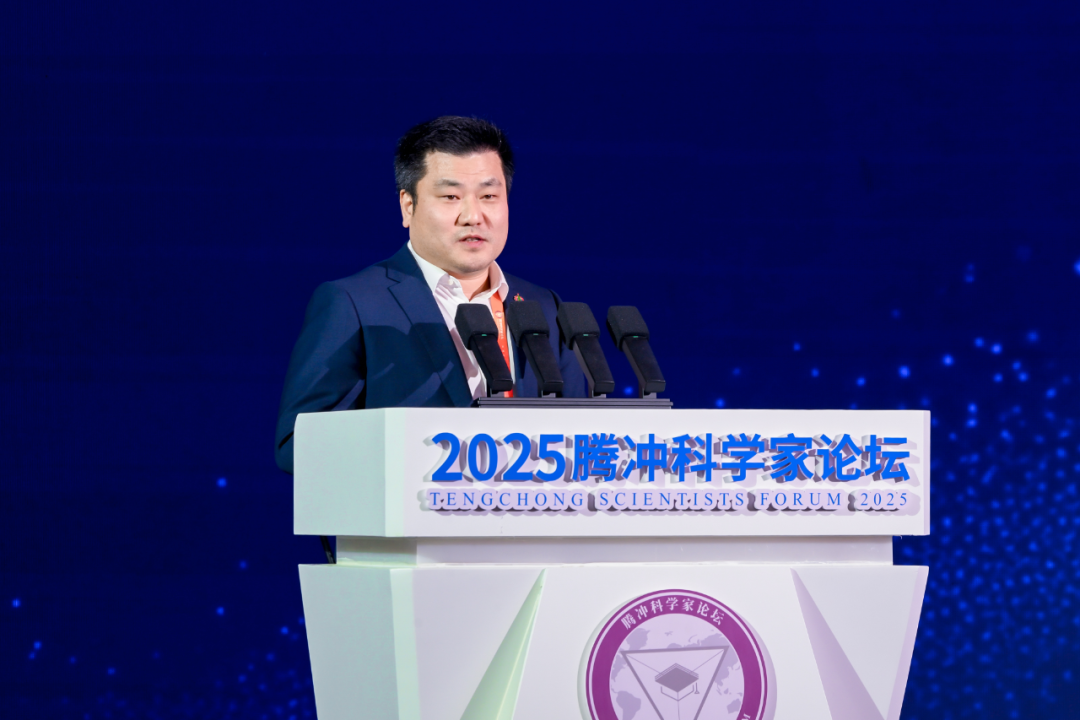
He Tao, Senior Vice President of Yunnan Baiyao
"Topological Quantum Computing Research and Innovation," which introduces the characteristics of quantum computing compared to classical computing, explains the research path of topological superconducting systems and the Majorana zero-energy mode, and shares the team's progress in experimental methods and innovative mechanisms. Academician of the Chinese Academy of Engineering, International Ma Yongsheng, Chairman of the CCUS Technology Innovation Cooperation Organization, systematically explained the application potential of artificial intelligence in six major scenarios: resource dependence, dual carbon pressures, and technological bottlenecks faced by the petrochemical industry: scientific decision-making, accelerated R&D, intelligent exploration, precision dual-carbon development, intelligent production control, and engineering digitalization. Jin Xianmin, professor at Shanghai Jiao Tong University, director of Wuxi Photonic Chip Research Institute, and founder of Turing Quantum introduced the use of permanent optical storage technology in materials systems, write mechanisms, high-dimensional coding, and engineering capabilities demonstrate its capabilities in data disaster recovery and application prospects for long-term retention needs such as AI training data. He Tao, Senior Vice President of Yunnan Baiyao Group, introduced the company's explorations in standardization, digitalization, AI recognition and forecasting, and supply chain intelligence in the front-end industrial chain of Chinese medicinal materials, believing that technology will drive quality and efficiency improvements in the traditional Chinese medicine industry.
Roundtable Forum
Heping hosted the forum
“AI Era" theme, discussing and exchanging ideas on how AI can transform industrial structures, improve efficiency, and promote high-quality development
forum live
nearly < of scientists, entrepreneurs, and executive trainees from the School of Economics and Management at Tsinghua University from fields such as quantum technology, energy and chemical engineering, intelligent manufacturing, biomedicine, and other fields. /span>300 people attended the forum. Cross-sector dialogue and integrated exchanges promote mutual advancement between scientific research exploration and industrial practice, providing strong support for enhancing innovation vitality, accelerating achievement transformation, and improving the industrial ecosystem under the background of technological evolution and industrial adjustment.